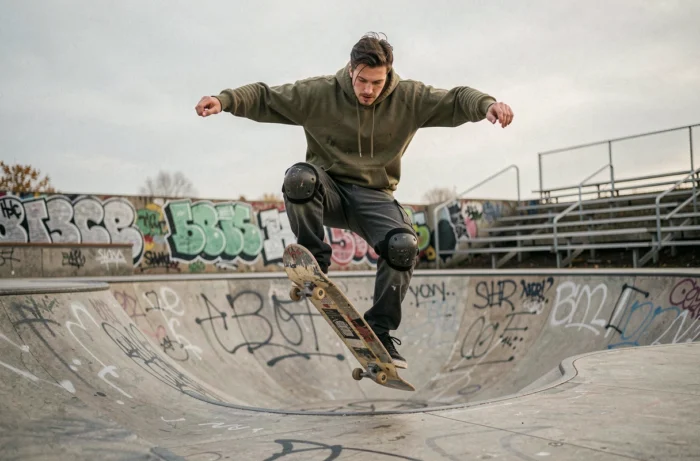
How to measure the recent evolution of extreme sports: by the number of new disciplines, by security budgets, or by the impact of climate on schedules? The trends reshaping this universe in 2026 are not limited to new spectacular tricks. They involve infrastructure, regulation, and even the viability of certain events in the face of environmental constraints.
GPS Tracking and Standardized Barriers: The Data Behind the Safety Reform
Safety in extreme sports has long relied on individual equipment: helmets, harnesses, back protections. The current shift is of a different nature. Safety is moving towards the design of courses and infrastructures, and this change is measurable.
The International Cycling Union (UCI) announced in September 2026 a regulatory framework to generalize real-time tracking of riders and vehicles in major races. The system was tested during the World Championships in Kigali in 2025. While road cycling is not always perceived as an extreme sport, outdoor endurance disciplines (ultra-trail, gravel, bikepacking) share the same issues of location and rapid rescue.
At the same time, barriers compliant with a study conducted by the University of Applied Sciences of Western Switzerland Valais-Wallis will be gradually introduced starting in 2027, first in the UCI WorldTour and the UCI Women’s WorldTour. The data compiled in the news section of the Ultra Sport website shows that this trend goes beyond cycling and permeates all high-risk outdoor events.
| Safety Measure | Initial Scope | Planned Extension |
|---|---|---|
| Real-time GPS Tracking | World Championships (Kigali 2025) | All major UCI races |
| Standardized Barriers at Finishes | UCI WorldTour and Women’s WorldTour | Other categories after 2027 |
| Extreme Heat Protocols | Summer Events (cycling, trail) | International Sports Calendars |
Extreme Heat and Sports Calendar: A Constraint Redefining Events
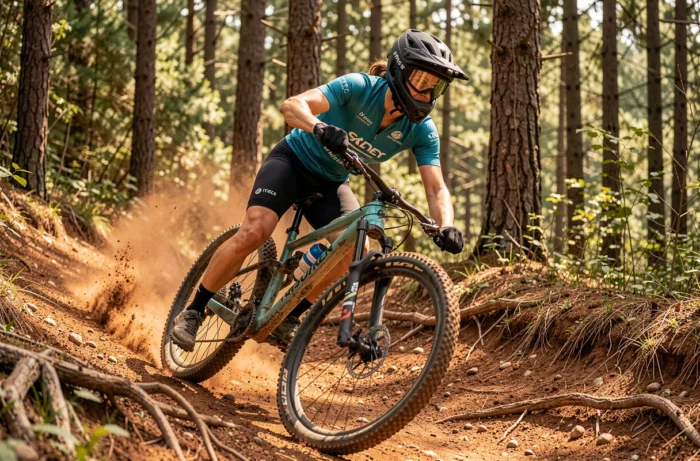
Heat is mentioned in almost no competing articles on extreme sports. Yet it is structurally changing the calendar of several disciplines. Events are being postponed, shortened, or canceled for thermal reasons, and this phenomenon is accelerating.
According to data relayed by sportanddev.org, heat is now part of the planning for international sporting events. Organizers of endurance events in Europe and the Middle East are incorporating specific protocols: modified schedules, additional refreshment points, temperature thresholds beyond which the race is neutralized.
This is not a marginal adjustment. For outdoor disciplines (trail, mountain biking, rock climbing, paragliding), the window of acceptable conditions is shrinking in certain regions. Federations must arbitrate between:
- Maintaining historical dates at the risk of dangerous conditions for athletes and the public
- Shifting events to cooler periods, which creates scheduling conflicts with other competitions
- Relocating certain events to higher altitude or latitude sites, incurring higher logistical costs
This climatic constraint affects not only competition. It also weighs on amateur practice: training slots in the mountains are concentrated into shorter time frames, and insurance companies are beginning to incorporate thermal risk into their conditions.
Professionalization of Extreme Sports: Snowboarding, Climbing, and New Economic Models
Professionalization is no longer limited to surfing and skateboarding. Since the inclusion of several disciplines in the Olympic Games, snowboarding, sport climbing, and freestyle BMX have seen their structures transform. High-level athletes now benefit from support comparable to that of traditional sports: physical trainers, video analysts, multi-year contracts with equipment manufacturers.
This evolution is creating a growing gap between the professional circuit and free practice. In climbing, competitors train on calibrated artificial walls, while the outdoor community remains attached to natural rock and the ethics of “clean climbing.” In snowboarding, professional riders are redefining their careers beyond competition, with income derived from content creation, coaching, and the design of technical products.
Infrastructures are following this trend. Indoor parks dedicated to action sports (trampoline, airbag, modular ramps) are adopting sustainable management strategies to ensure their long-term profitability. Sunpark Airbag, for example, documents facility management strategies specifically tailored to action sports parks, signaling that the sector is structuring itself as a full-fledged industry.
Emerging Disciplines and International Competitions to Watch
The X Games remain the global reference for extreme sports competitions, combining skateboarding, BMX, motocross, and winter disciplines. However, more recent events are capturing a growing audience in less publicized disciplines.
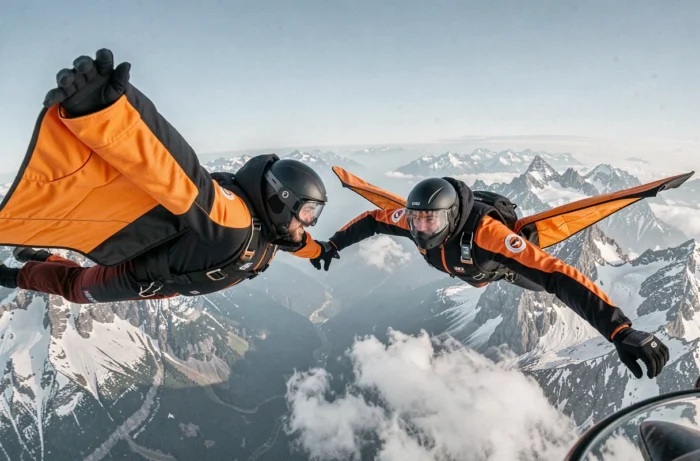
Wingsuit flying, speed riding (a combination of skiing and paragliding), and foil surfing are gaining visibility thanks to social media and capturing drones. These disciplines share a common point: they rely on recent technological advancements (composite materials, aerodynamic profiles, embedded safety systems) that have made their practice more accessible without eliminating the risk factor.
- Wingsuit racing is structuring its first circuits with qualification criteria and harmonized safety standards
- Foil surfing is benefiting from the post-Olympic enthusiasm for water sports, with a notable increase in the number of practitioners in Europe
- Urban competitions (parkour, freerunning) are still seeking a stable model of international governance
- Enduro and e-bike mountain biking championships are attracting new sponsors from the technology industry
The coming months will provide a clear indication of the direction the sector is taking. Regulatory safety and climate constraints now weigh as heavily as performance in the decisions of federations and organizers. The disciplines that manage to integrate these parameters into their development will be the ones that attract broadcasters, sponsors, and new generations of athletes.