When renovating a room, we think about colors, furniture, and layout. Rarely do we consider the regulatory framework that conditions the budget. However, the world of home combines aesthetic choices with very concrete constraints, especially since the recent changes to MaPrimeRénov’. Decoration, layout, energy renovation: these three axes intersect as soon as we touch a wall or replace equipment.
Energy renovation and layout: what MaPrimeRénov’ changes concretely
Since September 1, 2026, MaPrimeRénov’ has refocused its “by gesture” pathway on decarbonized heating. Insulation, ventilation, thermodynamic water heaters, or wood equipment are no longer individually funded in this pathway. For a homeowner considering redoing the insulation of a bedroom or installing a VMC before redecorating, the budget calculation changes entirely.
These works must now be integrated into a comprehensive renovation combining several insulation gestures and aiming for a gain of at least two energy performance certificate (DPE) classes. Keeping gas or oil heating may even block access to assistance. Therefore, one can no longer separate a decor project from a thermal project without risking losing a funding lever.
For those wishing to explore the different facets of housing, it is possible to access the home page of Les Patriotes where several themes are grouped together.
Energy savings certificates (CEE) remain an alternative for works excluded from the “by gesture” pathway. Before signing an insulation or ventilation quote, checking eligibility for CEE helps avoid financing a several thousand euro item alone.

Choice of decorative materials: balancing aesthetics and thermal performance
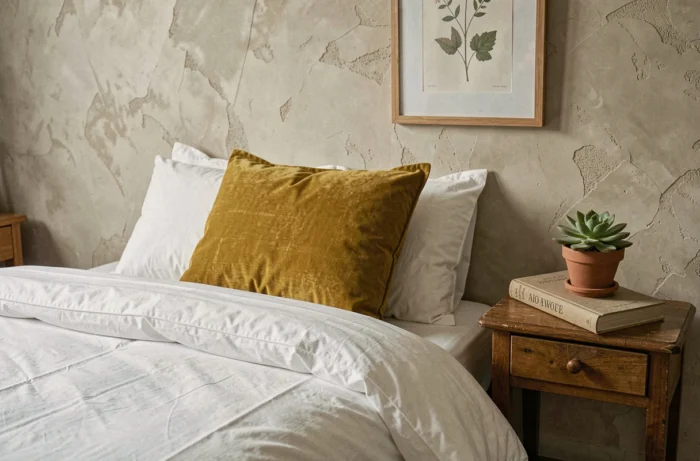
Wall coverings are rarely installed with thermal resistance in mind. With the new rules, this reflex becomes relevant. A lime plaster on a stone wall, for example, improves the hygrometric regulation of the room without adding an insulating layer. A solid wood paneling in a bedroom modestly contributes to thermal inertia.
Conversely, some purely decorative choices complicate future renovations. Installing vinyl wallpaper on a damp wall hides a problem that the insulation will have to absorb later. Knowing that a comprehensive renovation will be necessary to access MaPrimeRénov’, it’s better to anticipate.
Materials with dual function: decoration and comfort
- Wall cork serves both as a decorative facing and as sound insulation. It can be installed in a living room or bedroom without heavy work, and its thickness contributes to the thermal insulation of the wall.
- Ceramic resin-based paints, recently appearing on the market, claim a thermal barrier effect. Feedback on this point varies, but their primary function remains aesthetic.
- Thick thermal curtains, often overlooked in interior decoration, reduce heat loss through windows without affecting the structure. A simple lever before engaging in carpentry work.
Every decorative material has an impact on thermal comfort, even if minimal. Considering it from the design phase avoids undoing what has just been installed.
Living room and living space layout: circulation and zoning
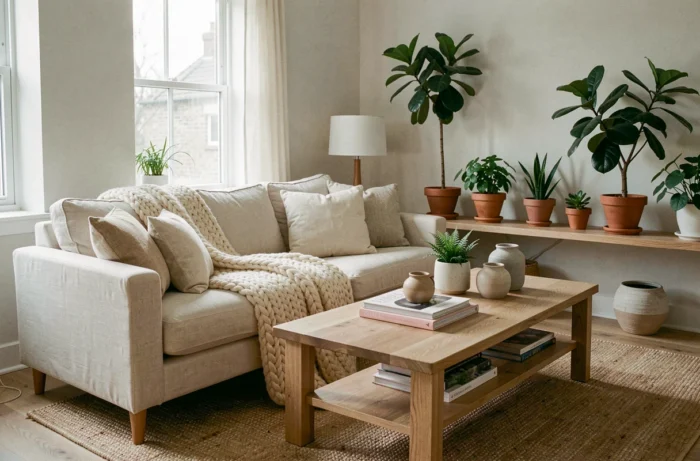
The living room concentrates the most common layout errors. The sofa is placed facing the television, a coffee table is added, and then it is discovered that the passage to the kitchen requires navigating around three pieces of furniture. Circulation in a living space should be designed before choosing the furniture, not after.
A medium-sized rectangular living room benefits from being divided into two distinct zones: a conversation area (sofa, armchair, coffee table) and a dining or office area. The separation can be a low piece of furniture, an open bookshelf, or simply a rug that visually delineates the area.
Colors and natural light in the living room
The choice of colors in a living room primarily depends on its exposure. A north-facing room struggles with cool shades like bluish gray, which accentuate the feeling of darkness. Warm tones, from sandy beige to light terracotta, are preferred to compensate for the lack of light.
Multiplying light points at different heights transforms the atmosphere of a living room more effectively than a change of wall color. A reading lamp near the armchair, an indirect floor lamp behind the sofa, a spotlight on a piece of furniture: three sources are enough to create a depth that the ceiling light alone does not provide.
Renovation of the bedroom and bathroom: often underestimated areas
In the bedroom, the first overlooked aspect is ventilation. A poorly ventilated room accumulates moisture, degrades paints, and promotes mold behind furniture pressed against the walls. Leaving a few centimeters of space between the wall and the back of a wardrobe is not a detail of layout; it is a technical precaution.
In the bathroom, the choice of flooring determines the durability of the entire room. A large-format porcelain stoneware tile limits joints (and therefore mold areas) and withstands splashes better than low-quality vinyl. The initial cost is higher, but the frequency of replacement decreases.
Furniture and storage: functional before decorative
Wall-mounted bathroom furniture makes cleaning the floor easier and gives an impression of space, even in a room of a few square meters. In the bedroom, integrated storage under a storage bed or in a headboard with niches avoids adding a dresser that clutters circulation.
A piece of furniture that only serves to decorate ends up being a hindrance. Every element in a room must serve a specific purpose, even if its design contributes to the overall ambiance.
Arranging a home is not just about stacking decorative ideas found online. The new constraints of MaPrimeRénov’ require thinking about each project holistically, linking aesthetic choices to the performance of the structure. A wall that is repainted today may be insulated tomorrow: anticipating this sequence saves time and money.