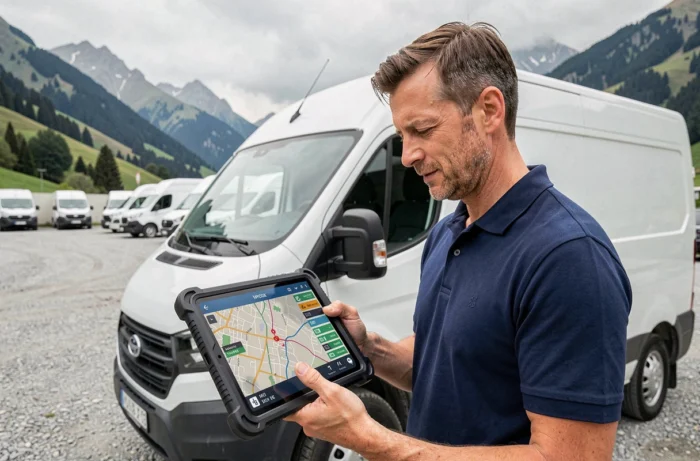
A plumbing artisan based in Veynes who sends two vans to job sites between Gap and Aspres-sur-Buëch does not have the same constraints as a national carrier. Mountain roads, the distances between interventions, and the small size of local fleets change the game regarding the choice, configuration, and especially the compliance of a vehicle tracking system. Understanding these specifics helps avoid a poorly calibrated investment or, worse, an illegal device according to the CNIL.
CNIL Constraints and Fleet Geolocation in the Hautes-Alpes
Most companies that equip themselves with a GPS device first think of real-time location. However, the regulatory framework imposes strict limits, and the CNIL reminded them in September 2026: the continuous collection of the location of employees’ vehicles violates the principle of data minimization.
In practical terms, one cannot justify permanent tracking simply by the desire to combat theft or to issue fines. For theft, the CNIL rather recommends recording the last known position of the vehicle, not a continuous trace.
In a context like that of Veynes, where service vehicles are sometimes also used for commuting, this distinction becomes critical. A mechanism to deactivate geolocation outside of working hours must be planned from the design of the device. Private trips, breaks, and vacations are excluded from collection.
Before any deployment, the CSE (or employee representatives, depending on the structure) is consulted. Each employee receives individual information about the purposes of the device, the data collected, and their retention period. Neglecting this step exposes the company to sanctions.
When looking into vehicle fleet tracking in Veynes, this legal dimension deserves to be the first point checked, well before choosing the equipment.
GPS Configuration Adapted to Mountain Roads Around Veynes
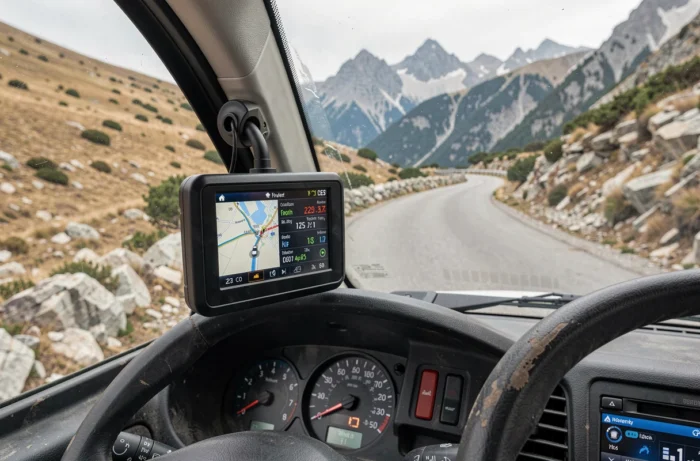
The valleys around Veynes (towards Gap, Serres, or the Croix-Haute pass) present areas where the GPS signal degrades. Short tunnels, narrow gorges, winding turns with rocky walls: the device must manage signal loss without generating false alerts.
Survey Frequency and Data Consumption
A survey every 10 seconds is common for urban fleets. In mountainous areas, a survey every 30 seconds reduces positioning anomalies without losing route traceability. Feedback on this point varies depending on the provider and the type of device installed.
For a fleet of a few utility vehicles, the bandwidth remains low. The challenge is more about the reliability of the signal than the volume of data transmitted.
Choice of Device: OBD, Wired, or Standalone
- The OBD device plugs into the vehicle’s diagnostic port. Quick installation, but it depends on the vehicle’s power supply and can be easily unplugged.
- The wired device, connected to the electrical harness, offers a more discreet and stable installation. It is better suited for utility vehicles that change hands frequently.
- The standalone tracker (battery-operated) is mainly used for trailers or non-motorized equipment. Its autonomy varies depending on the emission frequency.
For a local company with light utility vehicles, the wired device remains the most reliable choice in the mountains because it does not depend on an auxiliary battery and withstands vibrations better on degraded roads.
Fleet Supervision and Electric Charging Infrastructure in the Alps
The electrification of professional fleets is progressing, including in the Gap area and the Southern Alps. Fleet tracking is no longer limited to the vehicle’s position: it now includes charging management.
A software for supervision connected to IRVE charging stations (infrastructure for electric vehicle charging) allows tracking the charging status of each vehicle, planning rotations based on actual autonomy, and identifying available charging stations along a route. For a company in Veynes whose technicians operate as far as Gap or in the Buëch valley, cross-referencing GPS data and battery levels prevents dry breakdowns in poorly serviced areas.
The network of charging stations remains uneven in the department. Local installers offer quotes for the installation of stations on-site (depot, company parking), which simplifies daily logistics. Centralized supervision of these stations, combined with fleet tracking, provides a comprehensive view of the availability of each electric vehicle.

Profitability of Fleet Tracking for a SME in Veynes
On a small fleet, every unnecessary kilometer weighs proportionally heavier. Tracking allows identifying redundant trips, unjustified detours, and prolonged downtime. The gains focus on three main areas:
- Fuel (or electricity), by optimizing routes and detecting energy-consuming driving behaviors (sudden accelerations, prolonged idling).
- Preventive maintenance, by triggering mileage alerts for oil changes, tire checks, or technical visits, rather than relying on the driver’s memory.
- Vehicle allocation, by identifying underutilized vehicles that could be shared or not renewed.
A tracking system primarily monetizes management time: instead of making calls to find out where a utility vehicle is, the manager consults a dashboard. For a SME with three to ten vehicles, this organizational gain is often more tangible than fuel savings.
The cost of a geolocation subscription per vehicle varies depending on the selected features (real-time, history, alerts, eco-driving). Comparing offers based on a detailed quote, including the installation cost of the device and the duration of commitment, remains the most reliable method to assess the actual return on investment.
Fleet tracking for a company based in Veynes hinges as much on legal as on technical aspects. CNIL compliance conditions the legality of the device, GPS configuration must take into account the alpine terrain, and integration with charging stations prepares for the electric transition. Starting from these three axes before comparing commercial offers ensures that the tool will truly serve the daily activity.