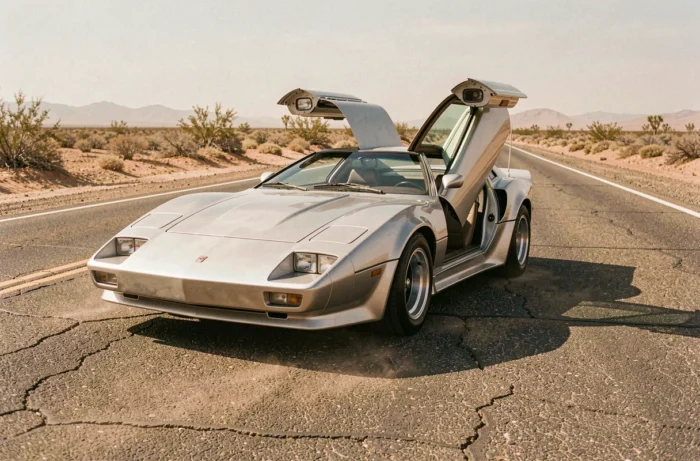
Some cars have never needed a famous driver to make an impression. A recognizable body, an engine roar at the right moment in a scene, and the vehicle becomes a character in its own right. From the big screen to television series, these models have shaped the automotive imagination of several generations.
What Turns a Simple Movie Car into a Collector’s Item
Have you ever noticed that two seemingly identical cars can sell for radically different prices at auction? The difference comes down to one word: provenance.
Collectors are not just looking for a similar model. They want the car actually seen on screen, the one referred to as the “hero car.” On a film set, several examples of the same vehicle coexist: one for close-ups, one for stunts, and sometimes a third for static scenes.
To prove that a vehicle is indeed the one from the film, buyers require production archives, on-set photographs, the chassis number, and records of modifications made for the needs of the script. Without these documents, even a visually perfect car remains classified as a mere promotional replica.
In 2024, a replica of the 1969 AMC AMX customized by George Barris for the series Banacek sold for $143,000. Vehicles with a proven connection to a film, like those from The Rockford Files, trade significantly above comparable models without documentation. Several enthusiasts also share their finds and rental projects on carsthestars.be, a space dedicated to movie vehicles in Belgium.
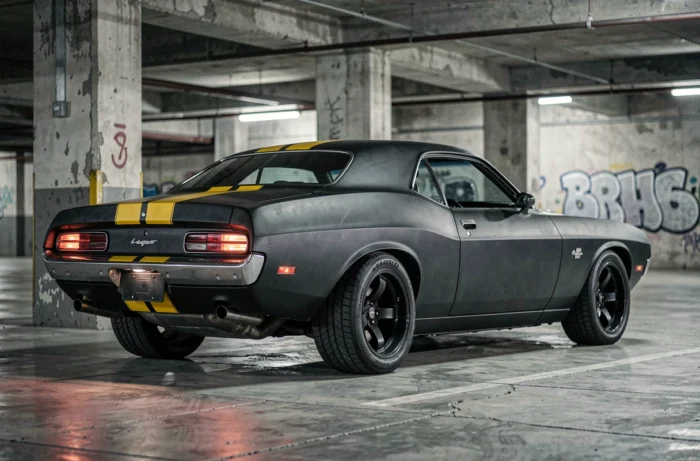
Ford Mustang, DeLorean, Aston Martin: Three Movie Cars, Three Different Destinies
Rather than creating an endless list, let’s focus on three models whose stories with cinema tell something distinct.
The Ford Mustang from Bullitt
The dark green Ford Mustang GT 390 driven by Steve McQueen in Bullitt redefined the car chase in cinema. This 1968 film laid the groundwork for an entire genre. The Mustang became synonymous with urban car chases, long before the Fast and Furious franchise existed.
What makes this case particular is that the “hero car” from Bullitt was found decades later in original condition. Its value lies as much in its documented history as in its role in popular culture.
The DeLorean DMC-12 from Back to the Future
The DeLorean was a commercial failure before Robert Zemeckis chose it for his trilogy. The film saved this model from total obscurity. Without Back to the Future, the DMC-12 would have remained a curiosity of the 1980s, known mainly for its gullwing doors and the bankruptcy of its manufacturer.
The choice was not trivial. The script required a car with a futuristic look, strange enough to be credible as a time machine. The brushed stainless steel body of the DeLorean fulfilled this role without additional decoration.
The Aston Martin DB5 from James Bond
The Aston Martin DB5 first appeared in Goldfinger in 1964. It then returned in numerous Bond films, making it the vehicle most durably associated with a fictional character.
Unlike the Mustang or the DeLorean, the Aston Martin DB5 was not saved by cinema. It was already a prestigious model. The film amplified its aura by adding gadgets (ejector seat, rotating license plates) that have left a mark on the collective imagination well beyond the automotive circle.
Television Series: When the Car Defines the Character
In cinema, a car appears for the duration of a film, sometimes a saga. In a series, it accompanies a character for years. This prolonged exposure creates a different bond with the audience.
Here are a few examples where the vehicle has become inseparable from the hero:
- The black Pontiac Firebird Trans Am from K2000 (Knight Rider): named KITT, this talking car from the 1980s captured the imagination of an entire generation. KITT was not an accessory but the co-protagonist of the series.
- The Peugeot 403 convertible from Columbo: a choice that was completely counter to the norm. The lieutenant played by Peter Falk drove a battered and aging car, in stark contrast to the sedans of his wealthy suspects. The vehicle told the character’s story before he even opened his mouth.
- The 1969 Dodge Charger General Lee from The Dukes of Hazzard: painted orange with the Confederate flag on the roof, this car remains one of the most recognizable series vehicles in the world, despite the controversies surrounding its iconography.
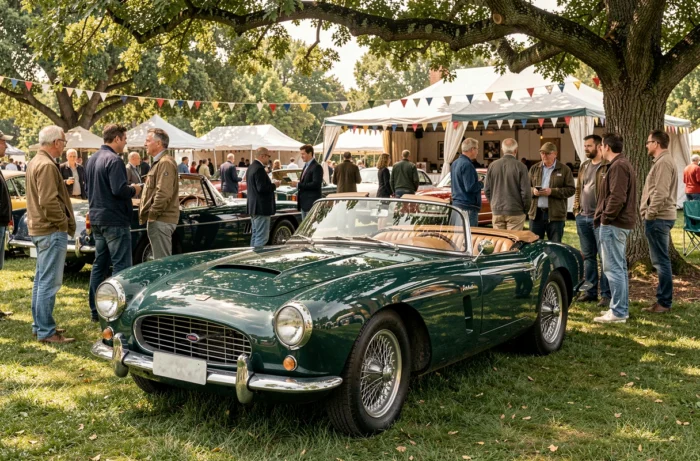
Automobile Museums and Cinematic Heritage
Automobile museums no longer just showcase rare or historical models. Fictional vehicles are now presented as cultural heritage objects, on par with a costume or a filming accessory.
The Petersen Automotive Museum in Los Angeles houses a collection dedicated to movie and series cars. It features vehicles from major franchises, displayed with their production context: storyboards, on-set photos, technical explanations of modifications.
This phenomenon goes beyond mere curiosity. It reflects a change in how the public perceives these objects. A movie car is no longer just a recycled filming accessory after the last shot. It is a cultural artifact that documents an era, a style of storytelling, a vision of automotive design.
The auction market confirms this trend. Vehicles linked to cult productions attract buyers who are not necessarily car enthusiasts, but collectors of popular culture items. The Batmobile from Batman Returns, the buggy from Mad Max auctioned in the United States: each sale fuels a narrative where cinema and automobiles feed off each other.
The next time you watch an action movie, pay attention to the car. Its model, color, and condition often tell as much as the dialogue. And in a few decades, it may end up behind a museum display case, with a plaque explaining why this specific choice changed the perception of an entire model.