A fashion trend refers to a stylistic movement adopted by a critical mass of designers during fashion shows, then echoed in commercial collections the following season. For autumn-winter 2026-2027, the directions taken on the runways reflect a return to textured materials, saturated colors, and silhouettes that play with proportions. Understanding these mechanisms allows for sustainable clothing choices rather than succumbing to fleeting micro-trends.
Digital Product Passport: What Changes for Clothing in Europe
Before discussing cuts or colors, a regulatory change will modify how brands present their pieces. The European regulation ESPR (Ecodesign for Sustainable Products Regulation, Regulation (EU) 2024/1781) introduces the digital product passport (Digital Product Passport, or DPP). The central registry of the European Commission has been operational since July 2026.
For textiles, the specific delegated act is expected in the fourth quarter of 2027, followed by a transition period of at least eighteen months. In practical terms, each garment will need to display verifiable data: fiber composition, durability, reparability, percentage of recycled content, presence of concerning substances, and end-of-life pathways.
This framework pushes brands to rethink their collections starting now. Buying a trendy piece in 2026 also means checking its traceability. Brands that anticipate this requirement are already displaying QR codes on their labels, providing access to the complete product sheet. When it comes to asserting one’s style, transparency about what one wears becomes a selection criterion on par with cut or color.
Following fashion trends on Have a Fashion Break allows you to spot brands that integrate these new requirements into their seasonal collections.
Trendy Colors for Autumn-Winter 2026: Saturated and Contrasted
The palettes offered this season break away from the neutral tones that dominated previous collections. The fashion shows highlighted bold shades, worn in blocks or in deliberately dissonant combinations.
The Return of Bright Colors in Total Looks
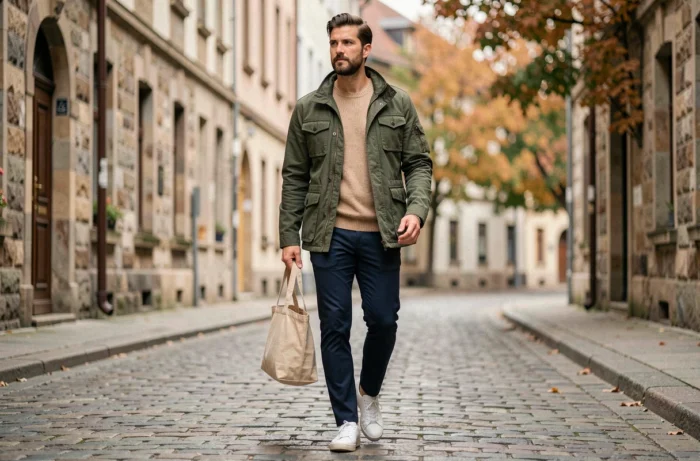
Deep red, cobalt blue, and forest green are worn from head to toe. The idea is not to accumulate colorful pieces, but to build a monochrome silhouette around a single strong hue. A wide-leg pant paired with a thick knit sweater in the same color range is enough to create a bold look without unnecessary accessories.
Leopard Print as a Contemporary Neutral
Leopard print continues to assert itself, but its use has evolved. It now functions as a background pattern, almost neutral, that is paired with solid pieces. A leopard midi skirt worn with a black turtleneck creates a controlled contrast. The key remains proportion: one leopard piece per outfit avoids visual overload.
Fashion Pieces to Adopt This Season: Cuts and Materials
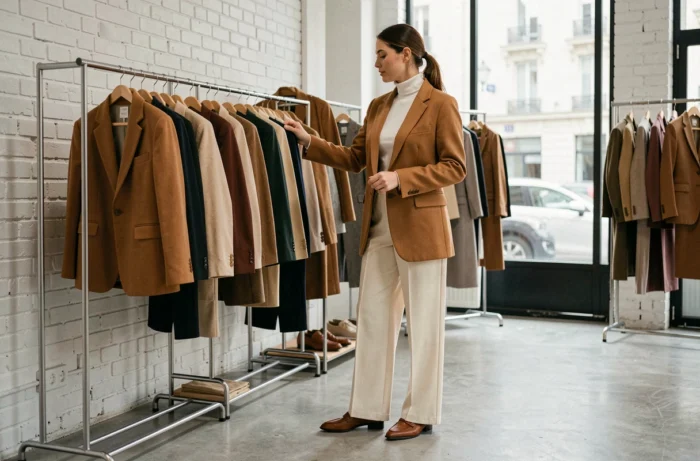
The cut trends for this season favor generous volumes on the lower body and fitted lines on the upper body. This play of proportions creates balanced silhouettes without requiring many pieces.
- The wide, fluid pant, high-waisted, remains the key piece of the wardrobe. Made of wool or thick crepe, it replaces the slim jean in most contexts, from the office to an evening out.
- The long ribbed knit dress, worn alone or layered over a thin turtleneck, carries through the entire cold season. Its versatility makes it a sensible purchase.
- The structured blazer with slightly marked shoulders returns in a shorter format, stopping at the waist. It redefines the silhouette by creating a contrast with the loose pant.
- Textured materials (corduroy, boucle wool, grainy leather) replace smooth surfaces and add visual depth to monochrome outfits.
The common thread of these choices is controlled layering. Wearing a sleeveless vest over an oversized shirt, then adding a structured coat on top, allows for adapting one’s outfit to temperature variations without sacrificing the coherence of the look.
Personal Style and Fashion Trends: Deciding Without Buying Everything
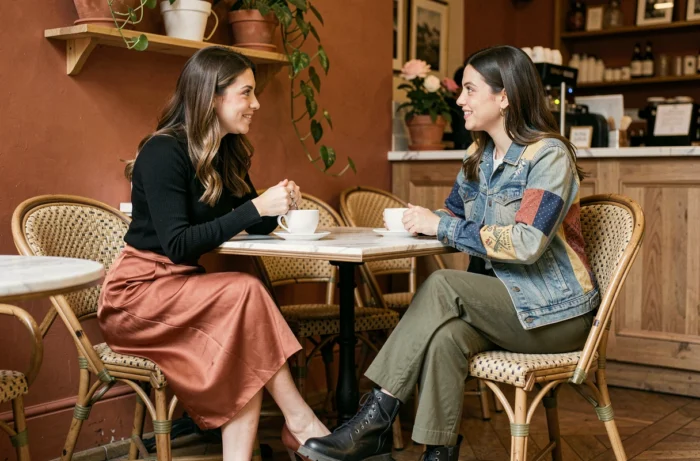
Adopting the season’s trends does not mean renewing your entire wardrobe. The most effective approach is to identify two or three pieces that integrate into an existing wardrobe.
A useful first filter: check if the desired piece can be combined with at least three already owned garments. A wide beige wool pant, for example, works with a navy sweater, a white shirt, or a black blazer. A trendy piece that only pairs with itself ends up at the back of the closet.
The second filter concerns the physical durability of the garment. With the upcoming digital product passport, information on fiber composition and durability will be accessible. In the meantime, prioritizing natural materials (wool, thick cotton, blended linen) or recycled synthetics with documented origins remains a reliable reflex.
Asserting one’s style also involves coherence in proportions. If the trend of wide pants suits a particular body type, there is no reason to force a short blazer that disrupts the silhouette. Style is asserted through selection, not accumulation.
The autumn-winter 2026-2027 fashion trends offer enough diversity for everyone to find pieces compatible with their wardrobe and habits. The real change this season may be less on the runways than in the labels: the traceability of clothing is becoming a quality marker as readable as a beautiful cut.