The French transport sector is not just about chasing revenue figures. In 2024, the signals of innovation are reflected in patent filings, CSR labels, and the introduction of unprecedented regulatory frameworks for autonomous vehicles. Here, we provide a technical analysis of what truly distinguishes innovative transporters from the rest of the pack.
Patents filed in 2024: transport dominates industrial property in France
Transport was the most represented sector among patents filed in France in 2024, according to data published by the INPI. Stellantis ranks first with 1,289 patent applications, followed by Safran with 1,216 applications. These two players alone account for a significant share of the 15,458 applications recorded for the year.
What stands out is the nature of the filings. Stellantis is heavily protecting its work on electrifying powertrains and embedded software architectures. Safran, on the aerospace side, is pushing on composite materials and hybrid propulsion. Valeo and the CEA complete the picture, each dropping one place compared to 2023.
Analyzing the ranking of French transporters from the perspective of industrial property provides a very different image from rankings based solely on tonnage or the number of vehicles. A transporter that files nothing is not preparing for the post-diesel era.

Responsible Transport and Logistics Label: the CSR criteria that matter
The awards ceremony for the Responsible Transport and Logistics label took place on December 10, 2024, at the Ministry of Transport, in the presence of Minister François Durovray. 25 companies were recognized for their performance in environment, social, and governance (ESG).
The number of awardees increased by 19 companies compared to 2023. Among the awarded groups: Samat, Mauffrey, Boueix, Transports Julien, Ageneau Group, Transports Luc Bouillon, and Lelieur Levage. This label, supported by the FNTR, is based on measurable indicators, not on self-reporting.
We observe that this type of distinction is increasingly influential in logistics tenders. A client that requires CSR certification effectively eliminates transporters that have not structured their extra-financial reporting. Here, innovation is not technological: it is organizational and documentary.
- Measured environmental performance (consumption, emissions per ton-kilometer)
- Auditable social policy (training, working conditions, turnover)
- Transparent governance with annually published indicators
Approval of autonomous delivery vehicles: the French regulatory framework
France has paved the way for the approval of autonomous delivery vehicles in August 2026. This regulatory green light shifts the sector from experimentation to industrialization. In practical terms, delivery robots can now be approved to operate on public roads, according to a framework defined by decree.
For last-mile transporters, this advancement changes the game on two fronts. The labor cost of the last mile, the heaviest item in urban logistics, can be restructured. And the time coverage extends without constraints on driving time.
However, approval does not mean immediate deployment. Transporters wishing to integrate these vehicles must adapt their fleet insurance, train their remote supervision teams, and reconfigure their routes. The first to industrialize autonomous delivery will gain a sustainable competitive advantage in the urban B2C segment.
Innovative SMEs in road transport: patents and technical niches
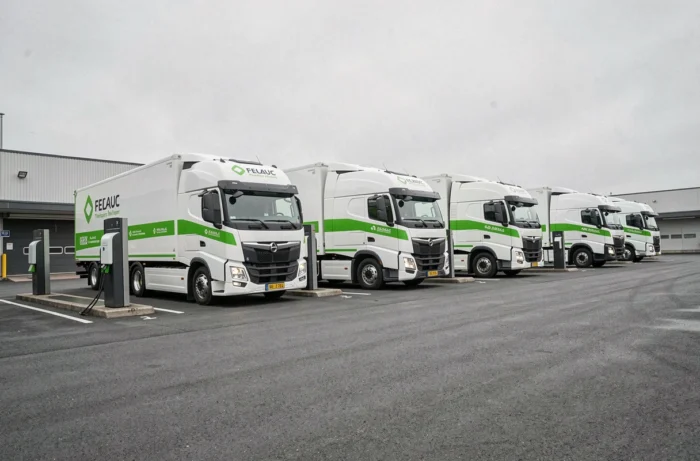
The INPI ranking is not limited to large groups. The rise of SMEs in patent filings reflects a growing technical competence in specialized segments: thermal management of refrigerated trailers, real-time load sensors, algorithmic optimization of transport plans.
These companies do not appear in the top 10 of the largest French transporters, but they create the added value that clients are genuinely purchasing. A patent on a temperature monitoring system in the cold chain has more operational impact than a fleet of a thousand tractors without technical differentiation.
- Embedded IoT sensors for real-time tracking of sensitive goods
- Route optimization algorithms incorporating low-emission zone constraints
- Energy recovery systems during braking adapted for heavy trucks
- Freight pooling solutions between shippers via digital platforms
SME innovation focuses on operations, not volume. This is where the French road sector distinguishes itself from North American models, which are more oriented towards capital consolidation.
Decarbonization financing: public levers for fleets
Public funding mechanisms for low-carbon transport have been structured in recent years. CEE premiums (energy savings certificates) represent a concrete lever for transporters renewing their fleets towards alternative powertrains: CNG, bioCNG, electric, or hydrogen.
The mechanism remains underutilized by SMEs in the sector, often due to a lack of internal financial engineering. Structured groups capture the majority of the aids, widening the investment gap with independents. A transporter that mobilizes CEE significantly reduces the additional cost of an electric tractor compared to its diesel equivalent.
The EcoVadis rating is also emerging as a marker of sustainable innovation. Seafrigo Group, for example, received a silver EcoVadis medal, reflecting a measurable approach beyond mere marketing display.
The ranking of innovative transporters in 2024 is not read in a table of revenue figures. It is read in the INPI registers, in the awardees of the Responsible Transport and Logistics label, and in the ability to anticipate regulatory frameworks such as that of autonomous delivery. French transporters investing in industrial property and CSR certification are preparing their positioning for the coming decade.